Difference Between Asus Rog Zephyrus G14 2025 and Razer Blade 18 2025 Explained
Introduction
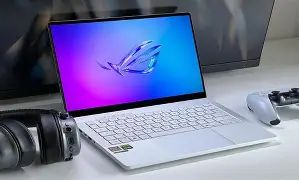
The 2025 refreshes of the Asus ROG Zephyrus G14 and the Razer Blade 18 underline two distinct philosophies in modern laptop design. Both target performance-oriented buyers, but they do so from very different starting points: the Zephyrus G14 emphasizes compact power and mobility, while the Blade 18 prioritizes maximum thermal headroom and display real estate for demanding workflows and immersive gaming. This article breaks down the differences across design, performance, displays, battery life, thermals, I/O, and real-world use cases to help prospective buyers choose the machine that best fits their priorities.
Product overviews
Asus ROG Zephyrus G14 (2025)
The Zephyrus G14 continues its lineage as a 14-inch high-performance ultraportable. In 2025, Asus refines the platform to balance sustained performance with thin-and-light ergonomics. The G14 is aimed at users who need serious CPU/GPU power on the move—content creators editing on the go, students who game between classes, and professionals who travel frequently but still want desktop-class workloads in short bursts.
Razer Blade 18 (2025)
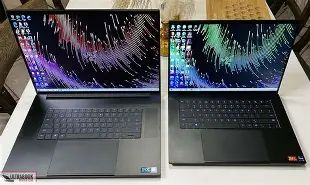
The Razer Blade 18 positions itself as a premium 18-inch laptop that prioritizes thermal capacity, display size, and component headroom. The Blade 18 is targeted at users who treat their laptop as a desktop replacement: creators working on high-resolution timelines, gamers who want large high-refresh displays, and professionals who run sustained compute-heavy tasks. Razer's design language emphasizes a slim chassis for its class, premium materials, and a strong focus on display quality and build finish.
Design and build
On design, the two machines reflect contrasting priorities. The Zephyrus G14 is compact, with an emphasis on portability and a smaller footprint that fits into backpacks and tighter workspaces. It typically uses magnesium-aluminum alloys and a focus on weight savings. The Blade 18, by contrast, is larger and heavier, which allows for a more rigid chassis, additional thermal volume, and a larger keyboard deck. Razer's construction often uses CNC-milled aluminum with tight tolerances for a premium feel that mirrors its brand positioning.
Performance and thermals
Both laptops offer strong performance, but their sustained performance envelopes differ. The Zephyrus G14 is optimized for a high performance-per-watt ratio: it squeezes impressive short-duration CPU and GPU output into a small chassis, which can mean occasional thermal or power-limited throttling in prolonged heavy loads. For bursty workloads—compiling, short gaming sessions, photo editing—the G14 delivers excellent responsiveness.
The Blade 18 trades portability for thermal headroom. Its larger chassis supports more aggressive cooling solutions—bigger heat pipes, larger fans, and more air volume. That translates to higher sustained clocks under long rendering jobs, extended gaming marathons, and professional workloads that keep the CPU/GPU at full load for hours. Buyers who need consistent peak performance across long sessions will see an advantage with the Blade 18.
Display and visuals
Screen size and panel choices are a fundamental differentiator. The G14's 14-inch form factor typically offers high-quality panels with strong color accuracy and high refresh rates suitable for gaming and content creation on the go. It strikes a balance between productivity and mobility—easy to carry but still sharp enough for photo and video editing when color-critical work isn't the primary focus.
The Blade 18's 18-inch display is aimed at immersion and professional-level visual workflows. Larger panels can come with higher native resolutions, wider color gamuts, and options for faster refresh rates combined with better color calibration. The bigger canvas benefits multitasking (more screen real estate for timelines and side-by-side windows) and gives a distinctly different experience for gaming and creative software.
Battery life and mobility
Because of its smaller size and often more efficient power tuning, the Zephyrus G14 generally offers better battery life for everyday tasks such as web browsing, document editing, and light media consumption. Users who value long unplugged sessions and frequent travel will appreciate the G14's lighter weight and smaller charger options.
Shop the latest Laptops & Computers picks on Amazon.
Shop Amazon →The Blade 18, with its larger screen and higher-power components, naturally consumes more power. Even with large battery options, endurance for light tasks will often be less than the G14, and heavy workloads will drain the battery more quickly. The Blade 18 is better suited to users who primarily work plugged in or who accept shorter battery life in exchange for desktop replacement performance.
Ports, expandability, and storage
Both models aim to provide a practical selection of ports, but the Blade 18's larger chassis usually translates to a wider and more flexible I/O layout—more full-size ports, additional display outputs, and possibly more high-speed USB lanes. The G14 tends to be more selective to preserve thinness and weight, offering essential ports plus one or two high-speed connectors for external displays and docks.
Regarding upgradeability, serviceability varies by design: smaller ultrabooks like the G14 may limit user-accessible components to a single storage slot or soldered RAM in some configurations. The Blade 18, being a desktop-replacement class machine, is often designed with easier access to M.2 slots and SO-DIMM slots, making future upgrades more straightforward for power users.
Keyboard, trackpad, and audio
Asus typically tunes the Zephyrus G14's keyboard for a compact layout that still aims for comfortable travel and responsiveness. The trackpad in recent G14 models has been improved progressively. Razer historically offers full-size keyboards with N-key rollover and a more spacious layout on larger laptops like the Blade 18, along with responsive trackpads and elevated typing comfort due to the wider chassis.
On audio, expect both to have above-average speaker systems for their classes, but the bigger chassis of the Blade 18 allows for deeper bass and higher sustained volume. For creators and media consumption, the Blade 18 will usually deliver fuller sound without external speakers.
Real-world use cases
- Mobile gamer/student: A buyer who needs gaming and productivity mainly on the move, values battery life and a smaller backpack footprint—G14 is typically the better fit.
- Content creator/professional editor: Someone working with long renders or multi-day projects that demand sustained performance and a large workspace—Blade 18 is advantageous for screen size and thermal headroom.
- Hybrid worker: A user who alternates between travel and a fixed desk setup and wants one machine for both—choosing depends on whether portability or sustained performance is more important.
- Desktop replacement gamer/streamer: Players who game long sessions and stream simultaneously will benefit from the Blade 18’s ability to keep higher clocks for longer.
Comparison table
| Category | Asus ROG Zephyrus G14 (2025) | Razer Blade 18 (2025) |
|---|---|---|
| Target | Portable high-performance ultraportable; balance of mobility and power | Desktop-replacement premium laptop; sustained performance and large display |
| Screen size | 14-inch class—portable, sharp panels for gaming and editing | 18-inch class—large workspace, better for timelines and immersion |
| Performance profile | High burst and short-duration performance; thermally efficient | Higher sustained performance thanks to larger thermal capacity |
| Portability | Lightweight, easy to carry, longer light-task battery life | Heavier, bulkier—best used plugged in or for short commutes |
| Thermals & noise | Well-designed cooling for size but can ramp up under long loads | Better thermal headroom for quieter, sustained high-load running |
| Ports & expandability | Essential ports, sometimes limited upgradeability | Broader I/O options, generally easier to upgrade/maintain |
| Display options | High-refresh, color-accurate panels available in compact form | High-resolution and high-refresh options with wider color gamut |
| Battery life | Typically better for light-to-moderate use | Larger battery possible but higher consumption; shorter real-world endurance |
| Audio & webcam | Good audio for size; webcam adequate for calls | Stronger speakers; larger chassis allows better microphones and webcam placement |
| Price & value | Often better value for buyers prioritizing portability | Premium pricing for larger chassis, display, and sustained performance |
Pros & Cons
Asus ROG Zephyrus G14 (2025) — Pros
- Compact and highly portable design for a performance laptop
- Excellent performance-per-watt for bursty workloads
- Good battery life for everyday productivity
- High-quality build with modern thermals in a small footprint
- Suitable for students and professionals who travel frequently
Asus ROG Zephyrus G14 (2025) — Cons
- Sustained heavy loads may trigger thermal or power-limited throttling
- Smaller display area can hinder extended multitasking or editing
- Upgradeability can be limited depending on the configuration
- Speakers and webcam are constrained by small chassis size
Razer Blade 18 (2025) — Pros
- Large, immersive display options with strong color performance
- Better sustained performance thanks to thermal headroom
- More expansive port selection and easier upgradeability
- Premium build quality with a larger keyboard and better audio
- Ideal as a desktop replacement for creatives and pro gamers
Razer Blade 18 (2025) — Cons
- Heavier and less convenient to carry daily
- Higher price point for comparable configurations
- Larger footprint makes it less suitable for tight workspaces or travel
- Battery life for mobile use is typically shorter than ultraportables
Buying guide: which one to choose
Choosing between the Zephyrus G14 and the Blade 18 should be driven by how one uses the laptop day-to-day. Below are targeted considerations that buyers typically care about.
1. Prioritize portability and travel
If most work is done away from a desk—commuting, flights, cafés—the Zephyrus G14 is the more practical choice. It fits into smaller bags, weighs less, and will last longer for lighter productivity tasks on battery. The trade-off is smaller screen real estate and slightly reduced sustained performance.
2. Need for sustained performance and screen size
For extended rendering sessions, complex 3D work, long gaming streams, or multitasking across many large windows, the Blade 18’s larger chassis and better thermals make it the more capable option. Users who keep their laptop docked at a desk or rarely travel will benefit from the Blade’s advantages.
Find top-rated Laptops & Computers products at great prices.
View Offers →3. Display and color accuracy
Photo and video editors should weigh display characteristics heavily. The Blade 18 typically offers larger panels and more advanced calibration out of the box. If color-critical workflows are frequent and a large timeline matters, the Blade 18 will be more convenient. If editing on the go and occasional color work is the use case, a well-calibrated G14 panel will suffice.
4. Upgradeability and long-term value
Buyers who plan to keep the laptop for several years and want to upgrade storage or RAM should prefer the model with easier access and more slots. The Blade 18’s size usually facilitates upgrades; the G14 may limit options depending on the exact SKU.
5. Thermals, noise, and working environment
Consider where the laptop will be used. If one works in quiet environments and needs silent operation under moderate loads, the G14 is often quieter during everyday tasks. For high-load scenarios where sustained cooling is necessary, the Blade 18’s fans and cooling design will keep clocks higher and potentially run more quietly relative to performance level.
6. Budget and total cost of ownership
Pricing varies by configuration, but expect the Blade 18 to command a premium for larger displays and higher thermal capability. Factor in warranty, potential future upgrades, and any required peripherals (external monitors, docks) when calculating total cost.
7. Port selection and connectivity
Assess the required ports: external displays, wired networking, multiple high-speed storage devices, and PCIe lanes for docks. If a broad set of ports without adapters is essential, the Blade 18 is likelier to meet those needs without dongles.
8. Other practical considerations
- Keyboard comfort: For long typing sessions, larger laptops generally offer a more comfortable layout.
- Speakers & webcam: If video calls and audio playback are important on-device, the Blade 18’s physical space allows improved components.
- Warranty & support: Check regional warranty coverage and service policies—these can be deciding factors for professional users.
Conclusion
The Asus ROG Zephyrus G14 (2025) and the Razer Blade 18 (2025) serve overlapping but distinct audiences. The G14 excels as a highly portable powerhouse for users who need strong performance on the move without sacrificing battery life or ease of transport. The Blade 18, meanwhile, is a compelling choice for those who treat their laptop as a desktop replacement and require larger displays, broader I/O, and consistent high performance under long workloads.
Ultimately, the decision comes down to use case: choose the Zephyrus G14 for mobility and an excellent performance-per-watt balance; choose the Blade 18 for sustained power, a larger visual workspace, and greater upgrade flexibility. Evaluating how one balances portability, thermal needs, and display requirements will lead to the right choice for their workflow and lifestyle.