The Truth About the Viltrox AF 28mm f/4.5: Pros, Cons, and Verdict
The digital photography landscape has undergone a significant shift in recent years. While the initial mirrorless revolution focused on high-performance, weather-sealed, and often bulky professional optics, a secondary movement has emerged: the pursuit of pure portability. Photographers are increasingly looking for ways to carry full-frame power in an everyday-carry form factor. It is within this niche that the Viltrox AF 28mm f/4.5 operates. Often referred to as a "chip" or "pancake" lens, this remarkably thin optic challenges the traditional notion of what a modern autofocus lens should look like and how much it should weigh.
The 28mm focal length occupies a classic space in photography history. Wider than the standard 35mm but less distorted than a 20mm or 24mm, it has long been the favorite of street photographers and photojournalists who want to capture a subject within its environment. By combining this versatile focal length with a revolutionary "cap-lens" design, Viltrox has created a product that essentially turns a high-end mirrorless body into a point-and-shoot camera. However, with an unconventional fixed aperture of f/4.5 and a physical profile that barely protrudes from the camera mount, the question remains: is this a serious photographic tool or a high-tech novelty?
This analysis explores the technical performance, physical handling, and real-world utility of the Viltrox AF 28mm f/4.5. By examining how it handles light, focuses on targets, and fits into a modern workflow, photographers can determine if this ultralight prime deserves a permanent spot in their camera bag or even on their camera body as a default cap replacement.
Design and Build Quality: The Ultimate Pancake
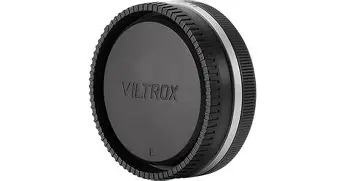
The first thing any user notices about the Viltrox AF 28mm f/4.5 is its physical dimensions—or lack thereof. In a market where "pancake" lenses usually measure at least an inch or two in length, the Viltrox pushes the definition to its limit. It is thin enough to be mistaken for a standard body cap at first glance. This design philosophy is clearly aimed at the "everyday carry" (EDC) enthusiast. When mounted on a compact full-frame body, the entire setup can often fit into a jacket pocket or a small sling bag that would normally struggle to accommodate a mirrorless system.
Despite its diminutive size, the build quality does not feel disposable. Viltrox has transitioned over the years from a budget alternative to a respected manufacturer, and that evolution shows here. The lens barrel is constructed from a combination of high-quality plastics and a metal mount, providing a sense of durability without adding unnecessary weight. There is a specific tactile satisfaction in how the lens integrates with the camera; it feels like an extension of the body rather than a cumbersome attachment.
One of the most distinctive features of the design is the integrated lens cover. Rather than a traditional clip-on cap that is easily lost, the Viltrox 28mm features a built-in sliding mechanism. This allows the photographer to protect the glass with a simple flick of a lever, making it incredibly fast to transition from a protected state to an active shooting state. This feature alone emphasizes the lens's intended use: spontaneous, high-speed documentation of daily life.
Optical Performance: Balancing Size and Sharpness
When designing a lens this thin, optical engineers face immense challenges. There is very little room for complex glass elements or internal movement. Viltrox has utilized an optical formula that prioritizes center sharpness while accepting certain compromises in the corners. At the 28mm focal length, the lens provides a generously wide field of view that is excellent for architecture, street scenes, and environmental portraits.
The fixed f/4.5 aperture is perhaps the most controversial aspect of the lens. Unlike most lenses that allow the user to change the aperture to control depth of field or light intake, the Viltrox 28mm is locked at f/4.5. This was likely a necessary trade-off to keep the lens as thin as possible. While f/4.5 is not "fast" by modern prime lens standards, it is sufficient for daytime shooting and provides a decent amount of depth for landscape work. On modern full-frame sensors with high ISO capabilities, the f/4.5 limitation is less of a hindrance in low light than it would have been a decade ago.
In terms of image quality, the center of the frame is surprisingly crisp. For social media sharing or standard-size prints, the detail rendered is impressive. However, as you move toward the edges of the frame, there is a noticeable fall-off in sharpness and some evidence of vignetting. For many street photographers, this "vignette" look adds a classic, film-like character to the images, but for technical architectural photographers, it may require correction in post-processing. Color reproduction remains neutral and consistent with other Viltrox AF series lenses, showing good contrast and minimal chromatic aberration in high-contrast scenarios.
Autofocus: Tiny Motors, Big Results
Including an autofocus system in a lens this small is a feat of engineering. The Viltrox AF 28mm f/4.5 utilizes a VCM (Voice Coil Motor) for its focusing mechanism. Because the glass elements being moved are very light, the focus is remarkably snappy. In daylight conditions, the lens locks onto subjects almost instantaneously. It is fully compatible with modern camera features such as Eye-AF and tracking, making it a viable option for capturing moving subjects or candid moments on the street.
Shop the latest Cameras & Photography picks on Amazon.
See Deals →The motor is also exceptionally quiet. This makes the lens a stealthy choice for street photography where drawing attention to yourself with a clicking or whirring lens would ruin the moment. Furthermore, the quiet operation is a benefit for casual videographers who want a wide-angle, "set-it-and-forget-it" lens for vlogging or B-roll while traveling. While the lens doesn't offer a manual focus ring—another casualty of the ultra-thin design—the reliability of the autofocus system means most users won't miss it in the scenarios this lens is designed for.
Real-World Use Cases
To understand the truth about the Viltrox 28mm, one must look at where it excels in the real world. This is not a lens for a wedding photographer's primary body or a professional sports shooter. Instead, it is aimed at several specific types of users:
The Street Photographer: Speed and invisibility are the keys to great street photography. This lens makes a professional camera look like a harmless toy, allowing the photographer to blend into crowds and capture natural moments without intimidating subjects. The 28mm focal length is wide enough to capture the action on a narrow sidewalk but tight enough to keep the viewer focused on the subject.
The Traveler: When hiking for miles or exploring a new city, every gram of weight matters. The Viltrox 28mm takes up essentially zero space in a bag. It serves as a perfect backup lens or a primary choice for those days when the photographer wants to enjoy the sights without the physical burden of a heavy kit.
The Vlogger: For those who record video of themselves, 28mm is a "sweet spot" focal length. It provides enough background context to show where the creator is located without the severe edge distortion found in 16mm or 20mm lenses. The f/4.5 aperture provides enough depth of field to keep the presenter's entire face in focus even if they move slightly forward or backward.
The Family Documentarian: For parents who want better quality than a smartphone but don't want to carry a "professional" setup to the park or a birthday party, this lens is a bridge. It offers the sensor advantages of a full-frame camera with the convenience of a compact.
Technical Comparison: Viltrox vs. Traditional Pancakes
To put the Viltrox 28mm f/4.5 into perspective, it helps to see how it stacks up against other "small" lenses often found in a photographer's kit. The following table highlights the differences between this ultra-thin design and more traditional pancake or small prime lenses.
| Feature | Viltrox AF 28mm f/4.5 | Standard 35mm f/2.8 Pancake | Compact 28mm f/2 Prime |
|---|---|---|---|
| Thickness | Aprox. 13-15mm | Aprox. 25-33mm | Aprox. 45-60mm |
| Aperture | Fixed f/4.5 | Variable (f/2.8 - f/22) | Variable (f/2.0 - f/22) |
| Weight | Ultralight (Under 100g) | Light (120g - 180g) | Medium (200g - 300g) |
| Manual Focus | No (AF Only) | Yes | Yes |
| Lens Cap | Built-in Sliding | Traditional Snap-on | Traditional / Hood |
Pros and Cons
Every piece of photographic equipment involves trade-offs. The Viltrox 28mm f/4.5 is perhaps one of the most specialized lenses on the market today. Here is a breakdown of what buyers should love and what they might find challenging.
Pros
- Unmatched Portability: It is arguably the thinnest autofocus lens available for full-frame systems, making any camera significantly more pocketable.
- Integrated Protection: The built-in sliding lens cover is a brilliant quality-of-life feature that removes the need for separate lens caps.
- Center Sharpness: Excellent performance in the middle of the frame, providing crisp details for daily photography.
- Full-Frame Coverage: Unlike many small lenses that are designed for cropped sensors (APS-C), this lens covers a full-frame sensor without heavy vignetting or "black circles."
- Stealth Factor: Reduces the "intimidation factor" of a large camera, which is invaluable for candid and street photography.
- Fixed Aperture: Being locked at f/4.5 limits creative control over depth of field and makes low-light shooting more dependent on high ISO settings.
- No Manual Focus Ring: Users are entirely reliant on the autofocus system, which may be a deal-breaker for those who prefer manual overrides.
- Edge Softness: The corners of the image do not match the center in terms of clarity, especially on high-resolution sensors.
- Light Intake: An f/4.5 aperture is roughly one and a third stops slower than f/2.8, requiring more ambient light for clean exposures.
- No Filter Thread: Due to the sliding cover design, users generally cannot attach circular polarizers or ND filters.
Cons
Buying Guide: Is This Lens Right for You?
Choosing the Viltrox AF 28mm f/4.5 requires a shift in mindset. If you are a photographer who analyzes MTF charts and demands corner-to-corner perfection at every aperture, this is likely not the tool for you. However, if you find yourself leaving your "real" camera at home because it is too heavy, this lens might change your photographic life.
When considering this lens, first evaluate your camera body. The 28mm f/4.5 makes the most sense on compact full-frame bodies. On a massive pro-level body with a vertical grip, the lens's size advantage is somewhat lost, though it still functions as a capable "cap lens." On a sleek, rangefinder-style mirrorless body, however, the combination is aesthetically pleasing and functionally brilliant.
Discover deals on Cameras & Photography — updated daily.
See Deals →Second, consider your typical lighting conditions. If you primarily shoot in well-lit outdoor environments or bright cities at night, f/4.5 is perfectly manageable. If you are looking for a lens to shoot indoor concerts or dimly lit weddings, you will find the fixed aperture frustratingly dark. For landscape photographers, f/4.5 is often a "sweet spot" anyway, though the lack of filter threads might hinder those who use long-exposure techniques or graduated filters.
Finally, think about your focal length preference. 28mm is a specific choice. It is wider than the "natural" 35mm or 50mm look. It requires you to get closer to your subjects to make them feel prominent in the frame. If you enjoy the perspective of a high-end smartphone camera (which usually defaults to 24mm or 28mm), the transition to this lens will feel very natural. It provides a familiar field of view but with the superior dynamic range and depth of a full-frame sensor.
Detailed Product Analysis: The Hardware and Software Integration
One aspect of Viltrox lenses that often goes overlooked is the inclusion of a USB-C port for firmware updates. Even on a lens this small, Viltrox has managed to include the hardware necessary for future-proofing. This is vital because autofocus protocols can change with new camera body releases. By allowing users to plug the lens into a computer and update its internal software, Viltrox ensures that the lens will remain compatible with future autofocus improvements and camera features.
On the software side, modern mirrorless cameras typically apply lens corrections in-camera for JPEGs or provide profiles for RAW editors. While the Viltrox 28mm has some inherent distortion and vignetting due to its physical constraints, these digital corrections do a remarkable job of cleaning up the image. Once a profile is applied, the "truth" of the lens is that it produces images that are far higher in quality than its "body cap" appearance would suggest.
The lack of an aperture diaphragm also means that there are no "sunstars" created by diffraction at small apertures. You are always shooting at f/4.5. While this limits some artistic choices, it also simplifies the shooting process. You only have to worry about your shutter speed and ISO. For many, this "limit" is actually liberating, as it removes one variable from the equation and allows them to focus purely on composition and timing.
Conclusion
The Viltrox AF 28mm f/4.5 is a bold experiment in minimalist optical design. It is not trying to compete with the heavy, expensive, and perfect lenses that dominate the professional market. Instead, it offers a different kind of perfection: the ability to have a functional camera with you at all times without it feeling like a burden. It successfully transforms a professional full-frame camera into a tool for the everyday, reviving the spirit of the classic film point-and-shoots in a digital context.
The truth about the Viltrox 28mm is that it is a lens of compromise that results in a unique advantage. The fixed f/4.5 aperture and the absence of a manual focus ring are the "prices" you pay for the incredible 15mm thickness and the convenience of the built-in lens cover. For the street photographer who wants to be invisible, the traveler who wants to pack light, and the casual shooter who wants more than a smartphone can provide, those trade-offs are well worth it.
While it may not be the only lens you own, it is a lens that encourages you to take more photos. Any piece of gear that makes a photographer more likely to pick up their camera is a success. The Viltrox 28mm f/4.5 is more than just a cap for your sensor; it is an invitation to see the world with a wider lens and a lighter spirit. It proves that sometimes, in the world of photography, less really is more.
Discover Top-Rated Cameras & Photography on Amazon
Shop with confidence — see what thousands of buyers recommend.
Browse Deals →